Monday, July 1, 2013

Thunderstruck from the Cloud

So there we were enjoying this weeks Family Movie of "Fiddler on the Roof" when all-of-a-sudden a lightning bolt stuck so loud it shook dishes in the house and all our UPS devices cried themselves awake from their year long slumber.     Power was restored after a few seconds, our Roku TV suddenly stopped, I could smell a faint smell of smoke, and thus began our new life without internet.

Needless to say there was a brief moment of panic at the smell of smoke, but years of electrical  experiments led me to recognize the distinct smell of "magic" electrical smoke and calmed everyone down saying that it was probably just a component blown in an electronic device.

I started to take mental inventory of what I thought could go wrong and what was indeed wrong.   I have installed many home automation / av systems spanning almost 15 years and learned long ago to install a whole house Surge Suppressor  http://amzn.com/B00081K55Q  everywhere I go.   Other than the a temporary (I thought) knock-out of the Roku nothing else seemed awry.

I assumed we would survive the experience unscathed, but the lingering smell of burnt capacitors was telling me otherwise.  I headed to my AV closet where I then saw my Ubuntu Server Monitor with a "disconnected icon" on the tray indicating something terrible has happened with my wired network.  I glanced at my primary gigabit switch and found the link lights pulsating with weird levels of intensity that I had never seen before indicating this one has seen its last days.  Following the path I looked at the Asus RTN-16 router no longer indicated any ethernet link lights.   Going a little further noticed the Timer Warner Ubee modem was completely dark without a single glowing indicator of life and a faint trail of smoke rising from its vent.  Overall, I was surprised to see that the surge could travel from the Coax into and across my CAT5 network destroying everything in its path.

With the knowledge now that lightning had entered my house via the Coax cable carrying my internet signal, I was still puzzled as to how it got around ground block located in the service box.  Well the next morning I found the answer to that question real quick.   The cable running from the service box into the house was obviously added (not to code) by the previous home owners as it ran along the edge of the house, behind a gutter, and into a crawlspace vent.   Upon inspection of this coax wire I found that were it had touched the gutter it was a fusion of exploded metal and charred plastic.  Evidently the lightning must have struck the gutters / water in them and decided to make the leap into my Coax to get to ground.  
I re-ran a new RG6 line from the service panel into my electrical closet, bought a new cable modem, replaced the switches and router, however, the signal strength isnt good enough to link up now.  This is indicating to me that something may have happened beyond the service box on my house.   Feeling defeated I called TW for a service appointment which by now is already booked out till Sunday evening.

It made me realize just how much of our life was on the cloud now: No Internet, No VoIP home phone, No Streaming TV service, No Movies, No Music, and No online gaming.   At least our board and card games still work ;)


Thursday, May 16, 2013

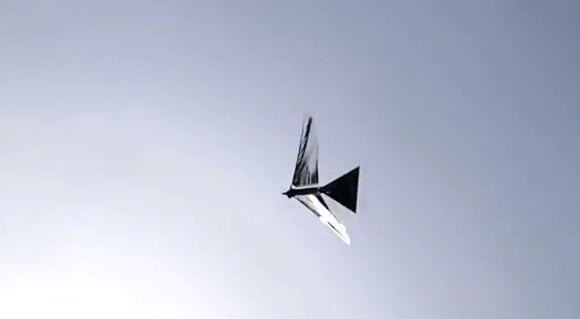
Beautiful Flying Robot

Just wanted to share what I consider to be an amazing effort of robotics.   The robotics researchers at UMD have perfected the ability to fly a self-contained robot using mechanics of real birds.

I have been watching various groups over the years experimenting with similar designs that either could only flap their wings in tandem or prototypes that were attached to an external power source.

Watching other birds in the video interacting with it is truly impressive!


 http://singularityhub.com/2013/05/14/video-shows-robo-raven-diving-spiraling-flipping-and-getting-attacked-by-a-hawk/

Sunday, March 10, 2013

Hybrid and Electric Cars -- Are they worth it?

Updated(2020):
Since the introduction of Hybrid cars in the US market with the Honda Insight in 1999 and release of plug-in electric car GM Impact EV1 in 1996, I have long considered the benefits of owning one.   The promise and perception of high MPG and helping the environment has been extolled for years since.  Does this really add up to being beneficial to owning one?

Fuel Savings (aka Save me money):

In order to understand the fuel savings we need to factor both the initial and recurring costs of operating the car.   Lets model out two choices available on the market today for my 50 mile daily commute:

  • Chevy Volt
    • MSRP: $39,995
    • Recurring:
      • Cost per day: 
      • Cost per year:
        • $3 * 5days * 52 weeks = $780.00
  • Hyundai Veloster
    • MSRP: $17,999
    • Recurring:
      • Cost per day:
        • 50 gas miles = $3.70 @ 31 Mpg = $5.96
      • Cost per year
        • $5.96 * 5 days * 52 weeks = $1550
  • DIFFERENCE
    • MSRP: $22,000
    • Recurring: $770/year
Obviously the plug-in EV gets better recurring costs, but factor in the initial price difference of $22,000 and I would need to drive the Chevy Volt for over 28 years to start saving money!

Environmental Impact:

According to EIA.gov , Georgia electricity comes from 30% coal fired (1001g/KwH), 34% natural gas (443g/KwH), and 31% Nuclear (66g/KwH) plants, so lets look at the environmental impact for both of the cars listed above:


    For a yearly commute, amount of CO2 produced
    • Leaf (EV) - 1,908 Kg
    • Volt (Hybrid) - 3,068 Kg 
    • Veloster (Gas) - 7,277 Kg 

     Summary


    • I am publishing this out to the internet in order to get feedback to help catch any errors in my logic and will happily adjust anything that is brought up.  


    Interesting Reading:


    Saturday, March 2, 2013

    ToneMatrix - Mini Flash Web Sequencer

    Just stumbling around the WWW this morning and ran across this cool little Flash based audio sequencer called "ToneMatrix" created by Andre Michelle:

    http://tonematrix.audiotool.com/


    A melody that I created this morning:
    http://tonematrix.audiotool.com/_/400.0.40.0.209.0.20.0.8g.0.18.g0.0.g0.255.20


    Sunday, February 24, 2013

    Pytomation 1.0 Released

    We are pleased to announce the 1.0 release of Pytomation.

    Pytomation is an extensible open source automation system written in Python. It's uses include home automation and lighting control but is certainly not limited to those functions.

    Pytomation features include:
            - Written in Python (Multiplatform)
            - REST API
            - Unique language to describe devices and actions.
            - Smart objects: Doors, Lights, Motion, Photocell etc.
            - Regular python programming in Mainloop for more complicated control.
            - Easy interface to web browsers and other technology.
            - Time of day on and off control.
            - Delays for time off.
            - Idle command, device will return to "idle" state.
            - Map one command to another with optional source and time.
            - Good hardware support with more coming.
            - Very easy to add new hardware drivers.
            - Local Telnet and Web access.
            - Good documentation complete with examples.
            - Much more.

    Pytomation currently has support for the following hardware interfaces
    with more planned in the future.

            - Insteon / X10 (2412N, 2412S)
            - UPB (Universal Powerline Bus) (Serial PIM)
            - JDS Stargate (RS232 / RS485)
            - Weeder Digital I/O board (Wtdio/RS232)
            - W800RF32 X10 RF receiver (W800/RS232)
            - Arduino Uno, digital and analog

    Future:
            - Z-Wave (Aeon Labs) DSA02203-ZWUS
            - CM11 X10 control
            - Others as requested.


    Download links and documentation are at the bottom of the web page.
    Please use the mail list for help at  this time, information about
    subscribing can also be found on the home page.


    Downloads, docs and mail lists http://www.pytomation.com

    Cheers and enjoy.

    Raspberry Pi Installation into Neato XV11 Robot

    Just put the finishing touches on installing the Raspberry Pi embedded Linux computer into the Neato XV11 robot.

    Following the guide at Dave's Home Robotics Notes I disassembled the Neato Vacuum, tapped the battery for 5V using a DC-DC converter per Ben's idea , and installed a Raspberry Pi in place of where the dustbin usually goes.

    Cable management is extremely important in this configuration as the Pi is more consumer friendly with its plugs which means a bit of pain for us electronic geeks wielding soldering irons.   Having said that I didnt want to solder directly on the Pi board, so I managed to jam most of the cables / DC-DC into the blower area underneath the turret.  Because the Laser ( LIDAR ) is so close to the top of the robot, I needed to make sure everything in the dustbin area is as flat as possible.

    Unfortunately I discovered that there doesnt appear to be an API command for the robot to return to its charger, and  signal strength may not be available through its API as well for a more obvious solution, so I would appear that my first task is to get a spatial Neural Network setup for this specific purpose.  More on this later....


    Friday, January 11, 2013

    Lowes Smart Home Product - IRIS

    Last Summer Lowe's introduced a new smart home product called IRIS.  I am an avid supporter of Home Automation projects and the price point for an ethernet device that does z-wave and zigbee for $99 was too compelling so I bought one.   

    Looking to integrate this hardware into my existing Pytomation / Misterhouse home automation system, I decided to see how "open" they are about third party integrations.

    What I have found is that they have a REST based API available from their own servers in the cloud, however, I could not find a way to access this device locally within my own network.

    I spent an hour or so sharking the device to see what was available and here are my results:


    • The device is created by AlertMe (has their MAC vendor address)
    • It has TCP ports 80 and 111 open (neither one of them does standard HTTP on it though) Unknown protocol.
    • It communicates with imgserver.irissmarthome.com for firmware updates on HTTPS
    • It communicates with hubserver.irissmarthome.com for general communication on HTTPS
    • It appears to run Linux 2.6 based on nmap -O
    • It appears to have support for SafetyNet protocol (UDP port 4000) Dont know much about it other than is supports secure connections for embedded devices on ethernet.
    • I have heard that it has a TTL serial port on the board, but login password is unknown.

    Unfortunately for now, there does not appear to be a way to interface with the hardware component directly (and without their monthly fee).   This would leave my system to the mercy of internet connectivity to their cloud infrastructure and the lag associated with it, so I have decided to halt any further development with the devices.